Plan with the papers you have read, and the ones you have not.
The question, what is known, what you expect and how you will test it. Typed at the desk or talked through at the bench.
Talk the experiment through before you touch a pipette.
Start a call with Gelly's voice colleague and think out loud. It has read the papers you saved, knows what you highlighted, and searches the literature while you keep talking. When a paper's conditions differ from your plan, it tells you.
- Searches Europe PMC with up to three queries and gives you a shortlist with sources
- Compares paper conditions against your draft protocol
- Interrupt it any time, like a colleague at the next bench
Most planning happens at a desk, so type. Talk when your hands are busy at the bench. The same colleague answers in the notebook's bottom bar, with quick choices you can tap instead of long answers.
| Conditions differ | Saved paper | Your draft |
|---|---|---|
| Temp | 18 °C, 16 h | 37 °C, 4 h |
| IPTG | 0.1 mM | 1 mM |
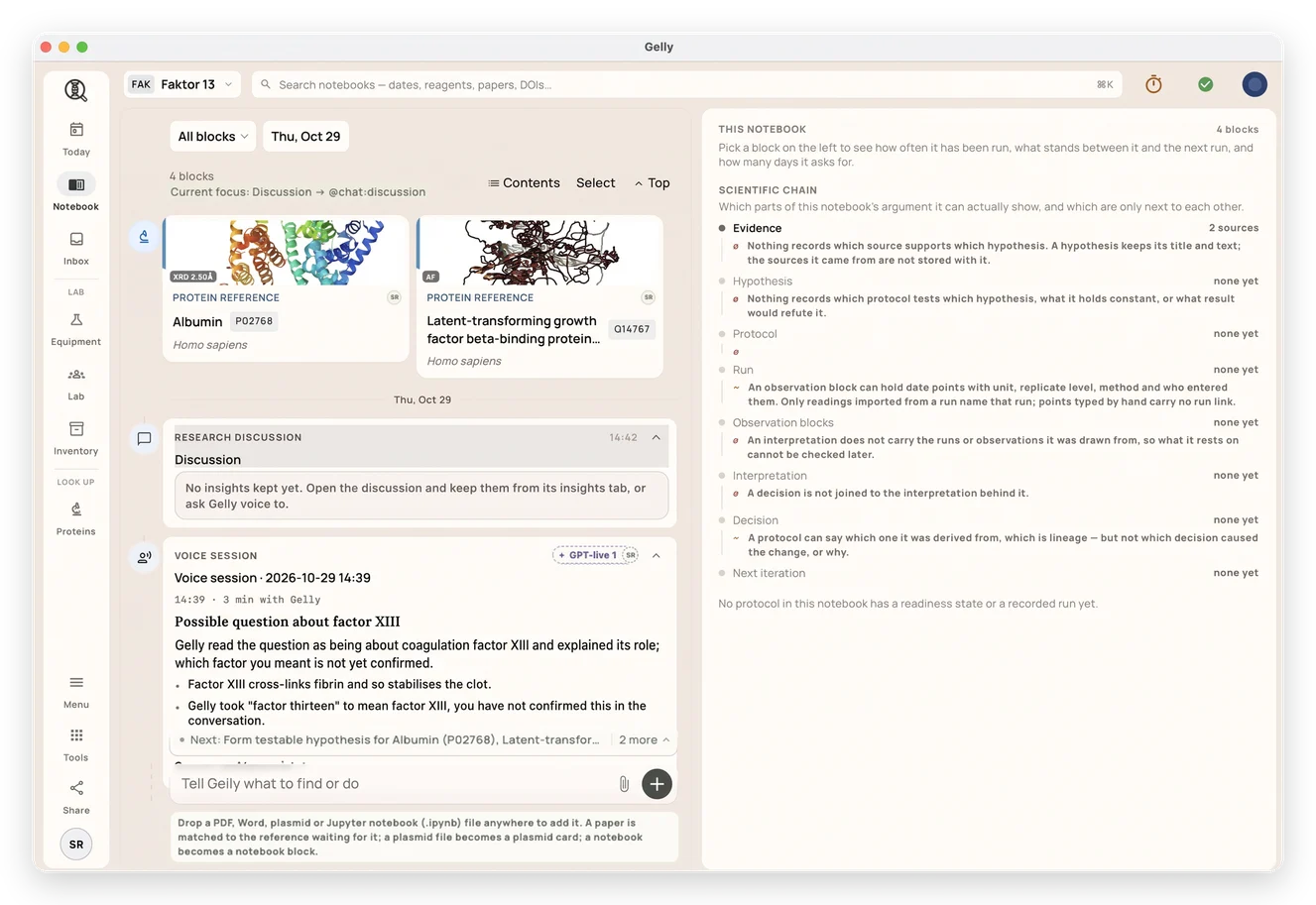
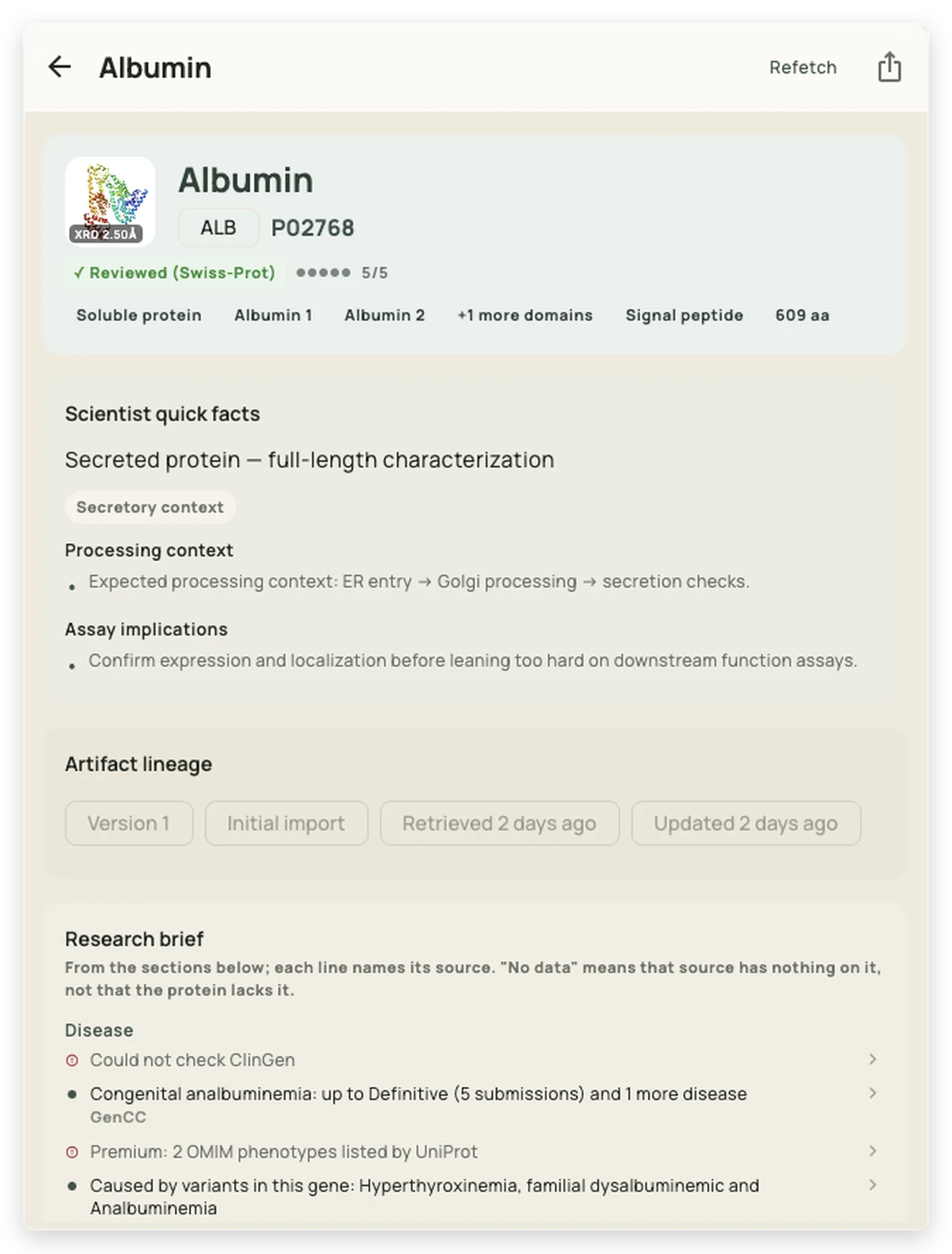
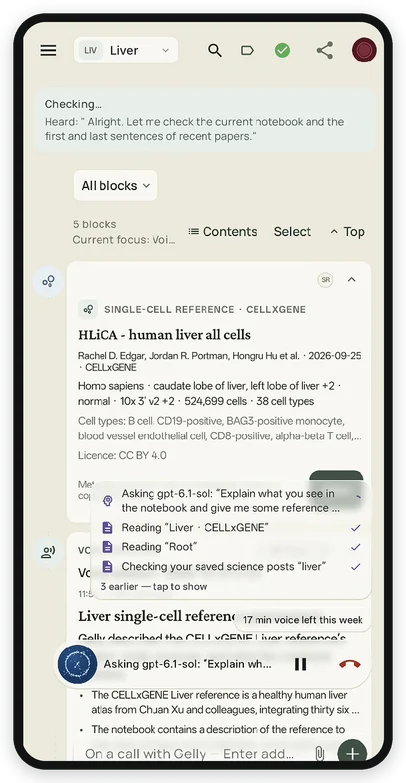
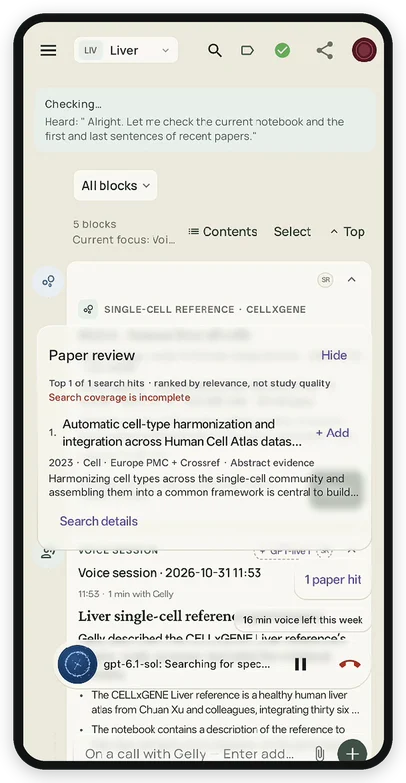
A voice colleague
Talk the experiment through. It has read the papers you saved and tells you when their conditions differ from your plan.
Europe PMCInterrupt any timeLiterature you can cite
Search Gelly, Europe PMC and PubMed in one place. A highlight keeps its page and the words around it, so a model or a colleague can cite it exactly.
PubMedPDF highlightsHypotheses with a test
Write it in parts: because, your call, the outcome you expect. Gelly suggests the parts from your sources and plans the test that would settle it.
BecauseExpected outcomeMaterials from the paper
Reagents in a paper are matched against your inventory: what you have, and what to order.
Order listProteins, plasmids from your own map files, antibodies with RRIDs, cell lines and strains, clinical trials and patents. Each is a card with its source, not a copied paragraph.
UniProtGenBank filesRRIDCellosaurusClinicalTrials.govPatentsA weekly search that adds what matters to the notebook, with a note on why.